AC Capacitor Symptoms: How to Diagnose a Bad Capacitor and Choose the Right Replacement
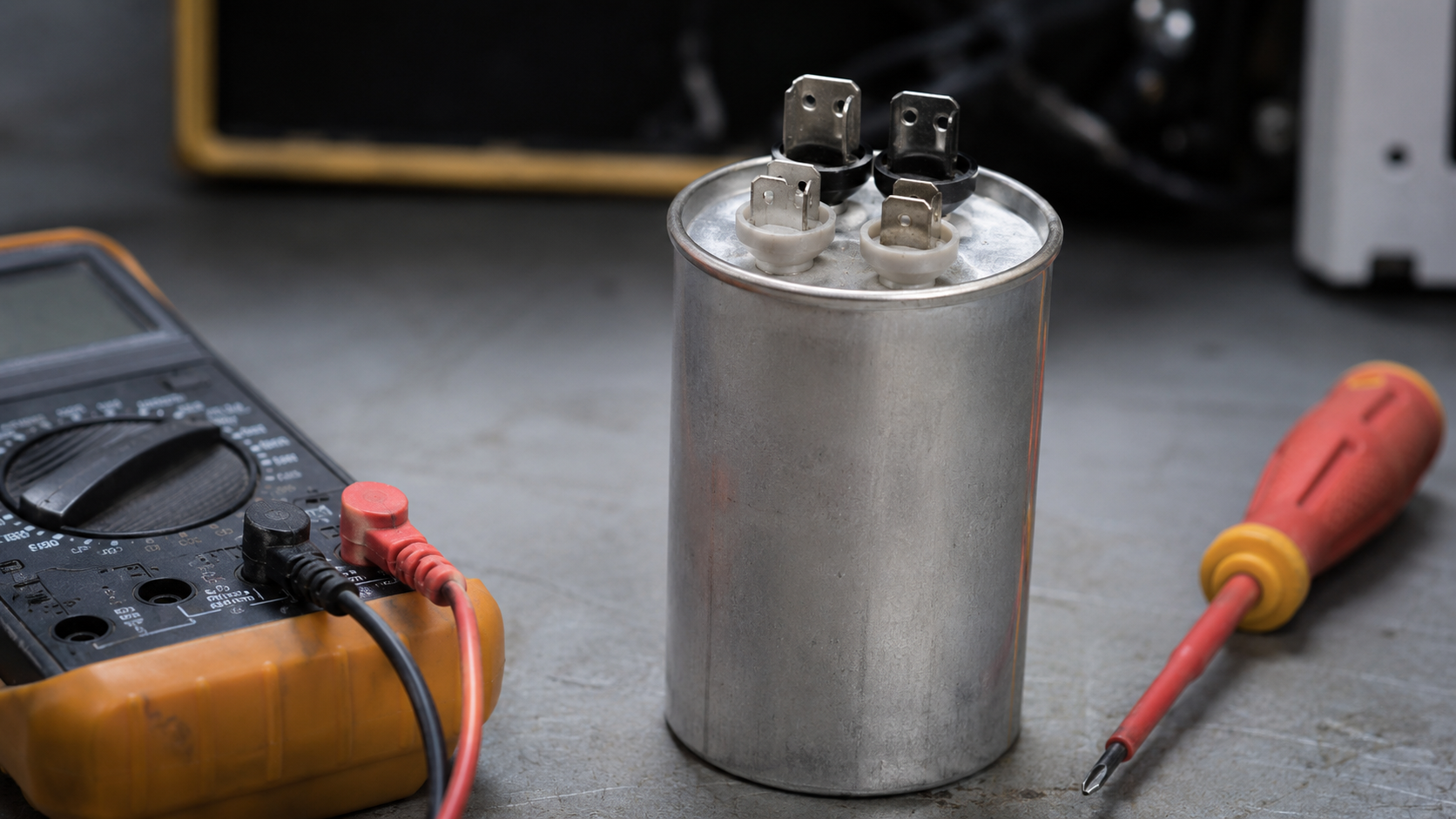
A failing capacitor is one of the most common reasons an air conditioner won't start — and one of the cheapest fixes in the trade, if it's caught early. The problem is that most of the warning signs look like something bigger is wrong, which sends a lot of service calls chasing a compressor or motor issue when a $15–$40 part was the actual cause.
Here's how to recognize the symptoms, understand the different capacitor types, and match specs correctly before ordering a replacement.
What a Capacitor Actually Does
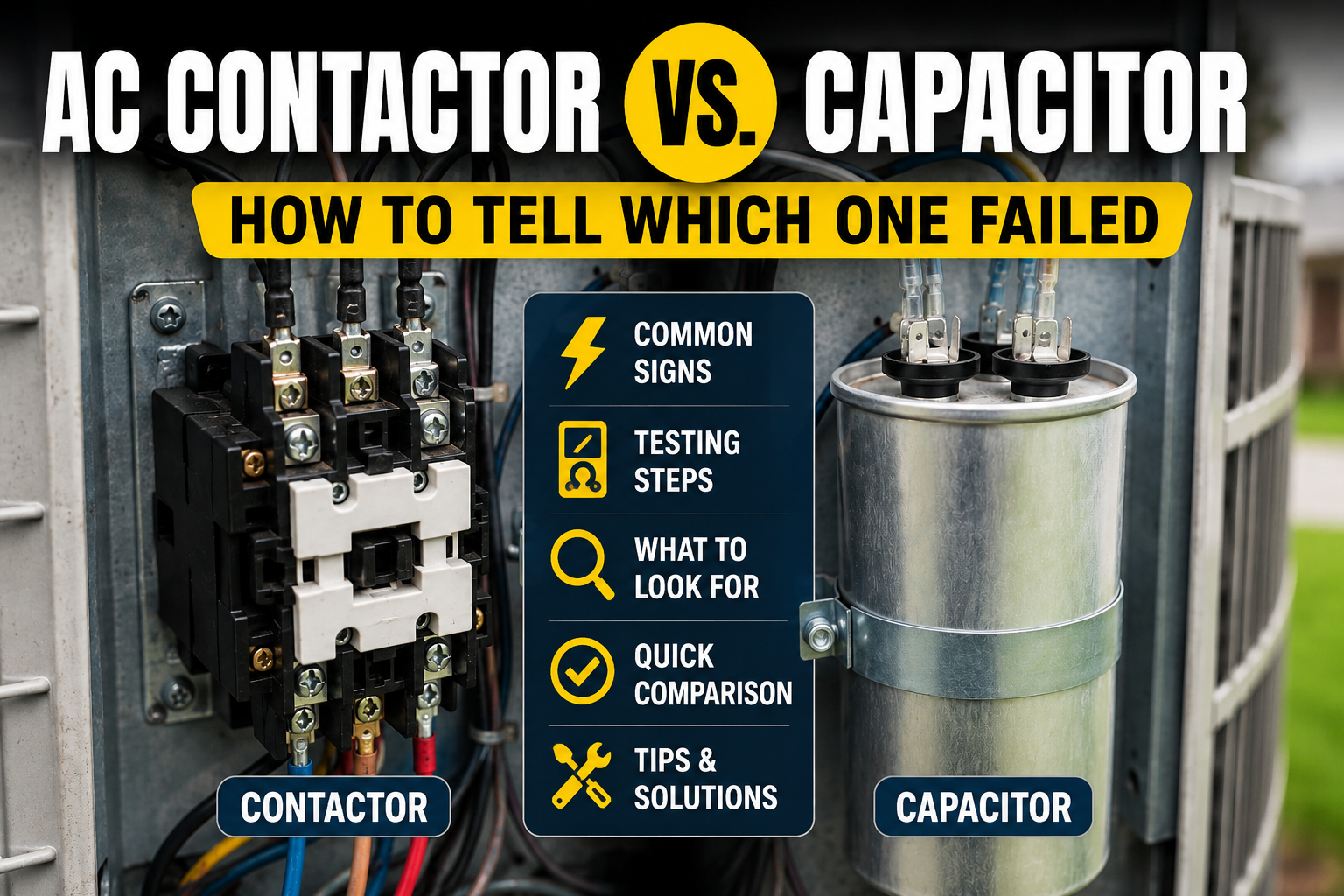
A capacitor stores electrical energy and releases it in a short, powerful burst to get a motor spinning. Compressors and fan motors need far more power to start than to keep running, and the capacitor is what supplies that initial push. Without it — or with a weakened one — the motor doesn't have enough torque to overcome its own resistance, and it either fails to start or strains hard enough to shorten its own lifespan.
Most residential AC and heat pump systems use one of three types:
- Run capacitor — stays in the circuit the entire time the motor runs, providing steady power. This is what keeps a compressor or fan motor running efficiently once started.
- Start capacitor — delivers a brief, high-power jolt only during startup, then drops out of the circuit. Common on harder-to-start compressors.
- Dual run capacitor — the most common type on modern split systems. A single canister with two separate capacitance values, one for the compressor and one for the condenser fan motor, printed on the label (e.g., "45+5 MFD").
Warning Signs of a Failing Capacitor
Capacitors rarely fail instantly — they degrade gradually, which means the symptoms usually show up in stages before a full breakdown:
- Outdoor unit hums but doesn't start. The motor is receiving power but doesn't have the starting torque to overcome resistance.
- Slow or hesitant startup. The system takes noticeably longer than usual to kick on.
- Warm air from the vents. The indoor fan runs, but the compressor outside never engages.
- Frequent short cycling. The system starts, then shuts off again quickly, unable to sustain a full run cycle.
- Rising energy bills with no other explanation. A weak capacitor forces the motor to draw more current to compensate.
- Breaker trips repeatedly. A struggling motor pulls excess amperage trying to start, which can trip the breaker as a safety response.
- Visible bulging, swelling, or an oily residue near the terminals. This is physical confirmation — replace immediately if you see this.

How to Choose the Right Replacement Capacitor
Getting the spec wrong is the single most common mistake when ordering a replacement — and using the wrong rating can damage the motor or void a system's warranty. Before ordering, confirm:
- Microfarad (µF/MFD) rating — must match the original exactly, printed directly on the old capacitor's label. On a dual run capacitor, there are two separate ratings (one per motor) — both need to match.
- Voltage rating — typically 370V or 440V on residential systems. It's safe to go up in voltage rating (a 440V capacitor can replace a 370V), but never down.
- Physical size and terminal layout — dual run capacitors have multiple terminals (COMMON, HERM, FAN) that must be wired correctly; mismatched terminal count or spacing can make installation unsafe.
- OEM vs. aftermarket — an exact OEM match protects an in-warranty system; a verified aftermarket equivalent from a trusted brand is a reasonable choice once a system is out of warranty.
Texpert Deals stocks 90+ capacitors across run, start, and dual run configurations, including trusted aftermarket brands like Packard and SUPCO.
A Note on Safety
Capacitors store a high-voltage charge even after a system is powered off, and that charge doesn't disappear on its own. Testing and replacement should only be done with the power fully disconnected at the breaker, using insulated tools, and after the capacitor has been properly discharged. If you're not confident handling high-voltage components, this is a job to leave to a licensed HVAC technician — the part itself is inexpensive, but the risk of working on it incorrectly isn't.
For a closer look at how technicians isolate and test electrical faults safely, see our HVAC Electrical Diagnostics guide using Fieldpiece test leads. A failing capacitor left unaddressed also puts extra strain on the compressor itself — repeated hard starts generate heat and wear that can turn a simple capacitor swap into a much larger repair. Our Copeland Scroll Compressor Diagnostics guide covers what that downstream damage looks like once it's gone that far.
Pro Tip for Contractors: Always double-check both microfarad values on a dual run capacitor label before ordering — it's easy to match the compressor-side rating and overlook the fan-side rating, which are almost never the same number.
Frequently Asked Questions
How long do AC capacitors typically last?
With regular maintenance, capacitors often last 5–20 years, though heat, power fluctuations, and system age all shorten that window. Many technicians replace them proactively around the 5-year mark on heavily used systems.
Can a bad capacitor damage other parts of my AC?
Yes. A failing capacitor forces the compressor and fan motor to draw significantly more current trying to start, which generates excess heat and accelerates wear — potentially turning an inexpensive capacitor swap into a compressor replacement if ignored too long.
What's the difference between a start capacitor and a run capacitor?
A start capacitor delivers a brief, high-power burst only during startup and then disconnects from the circuit. A run capacitor stays connected the entire time the motor operates, providing continuous power. A dual run capacitor combines both jobs for the compressor and fan motor in a single unit.
Is it safe to replace an AC capacitor myself?
Capacitors hold a high-voltage charge even when disconnected from power. If you're comfortable working with insulated tools, discharging the capacitor safely, and matching specs exactly, it's a manageable repair — otherwise, it's worth having a licensed technician handle it.
Do I need the exact same capacitor brand, or just the same specs?
Specs matter more than brand. As long as the microfarad rating, voltage rating, and terminal configuration match, a verified aftermarket capacitor from a reputable brand performs the same job as the original.
Final Thoughts
A humming outdoor unit, a slow start, or an unexplained jump in your energy bill are often the earliest signs of a failing capacitor — and catching it at that stage is a small fix instead of a compressor replacement. Match the microfarad and voltage rating exactly, confirm the terminal layout, and Texpert Deals has the stock to get the right part shipped fast.
Explore our full range of AC & HVAC capacitors, or request a wholesale quote for volume orders.
Related Reading: