HVAC Parts & Supplies: The Complete Buying Guide

When contractors, distributors, and homeowners search for "HVAC parts and supplies," most of them are not looking for a single specific item — they are trying to figure out what category their problem even falls into before they can order the right part.
That distinction matters. A technician stocking a truck for the week needs something very different from a homeowner staring at a dead condenser trying to work out whether it is a part or a whole-unit problem. This guide walks through every major category of HVAC parts and supplies, who typically needs each one, and what to check before you buy.
Who Actually Buys HVAC Parts and Supplies
Before getting into categories, it is worth being clear about who is on the other end of this search — because "the right part" means something different depending on who is asking.
- Contractors and technicians need parts fast, need them to be genuine OEM or a verified equivalent, and care most about not getting called back to the same job twice.
- Distributors and resellers are buying in volume, so pricing tiers, Net-30 terms, and consistent stock availability matter more than any single part.
- Facility and shop owners are usually trying to keep equipment running without hiring out every small repair, so clear part identification matters as much as the part itself.
- Homeowners doing research typically want to understand what broke before they call someone — or decide whether it is even a DIY-safe repair (refrigerant work never is; it legally requires EPA certification).
Texpert Deals stocks across all four of these needs from one catalogue — 1,000+ brands and 100,000+ items, built out over 8 years of supplying contractors nationwide.
The Core Categories of HVAC Parts and Supplies
HVAC parts break down into a handful of functional groups. Here is what is actually in each one, and when you would reach for it.
Controls & Automation
This is the "brain" of the system — the components that tell the equipment when to turn on, how hard to run, and when something is wrong.
- Thermostats — from basic mechanical units to smart, Wi-Fi-connected models. The most common homeowner-facing part on this list.
- Control boards — the circuit board that manages ignition sequence, blower timing, and safety lockouts. A scorched or corroded control board is one of the most common reasons a furnace will not fire.
- Sensors and hot surface ignitors — small parts, but a failed ignitor is one of the single most common no-heat service calls.
If a system is "acting confused" — cycling oddly, not responding to the thermostat, or throwing error codes — the fault usually lives somewhere in this category.
Motors & Components
Anything that physically moves air or refrigerant runs off a motor, and motors wear out on a schedule.
- Blower motors push air through the ductwork. A failing one usually announces itself with grinding, humming without airflow, or a burning smell.
- Condenser fan motors cool the outdoor unit — if this stops, the system can overheat and trip out on high pressure.
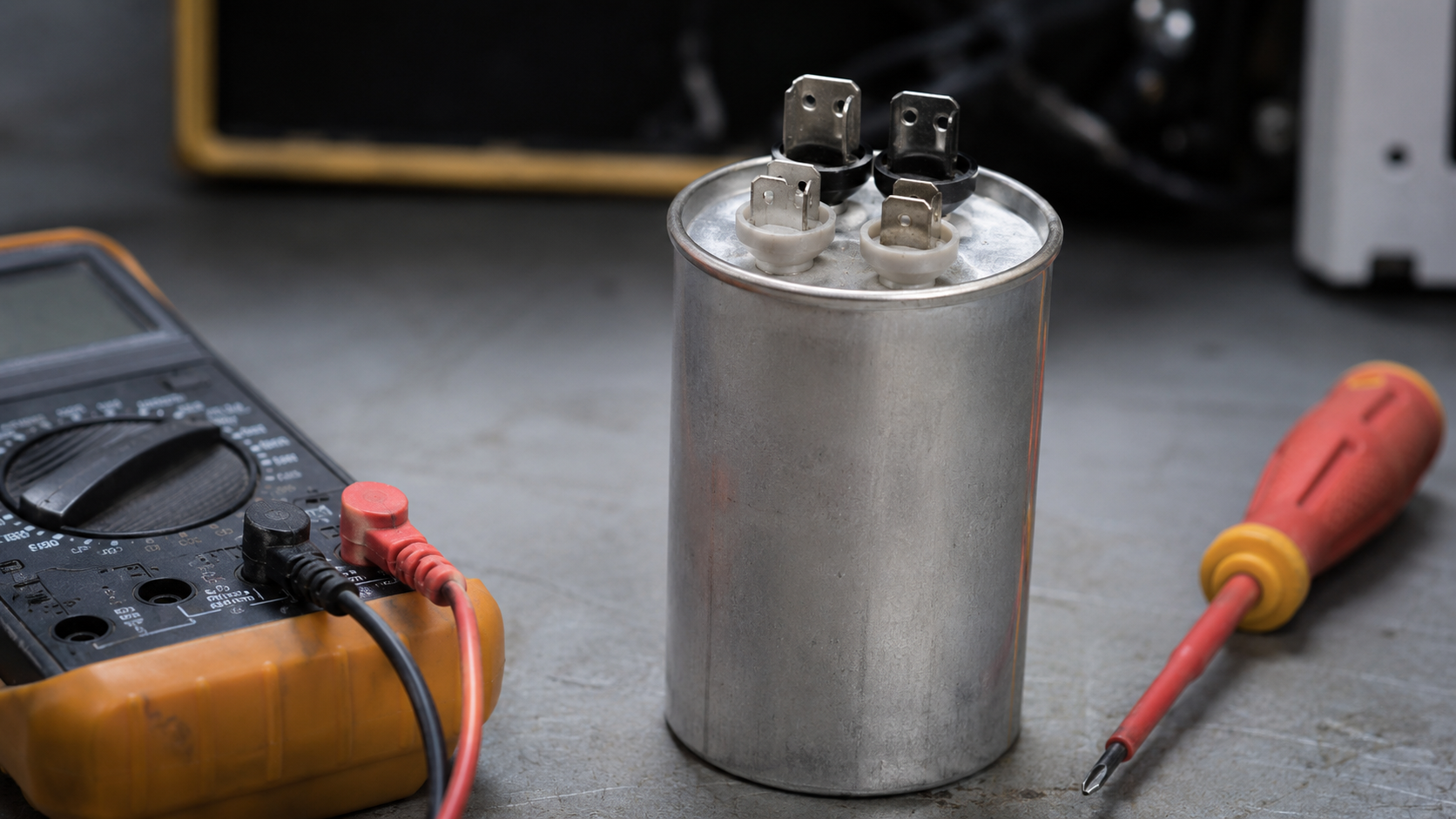
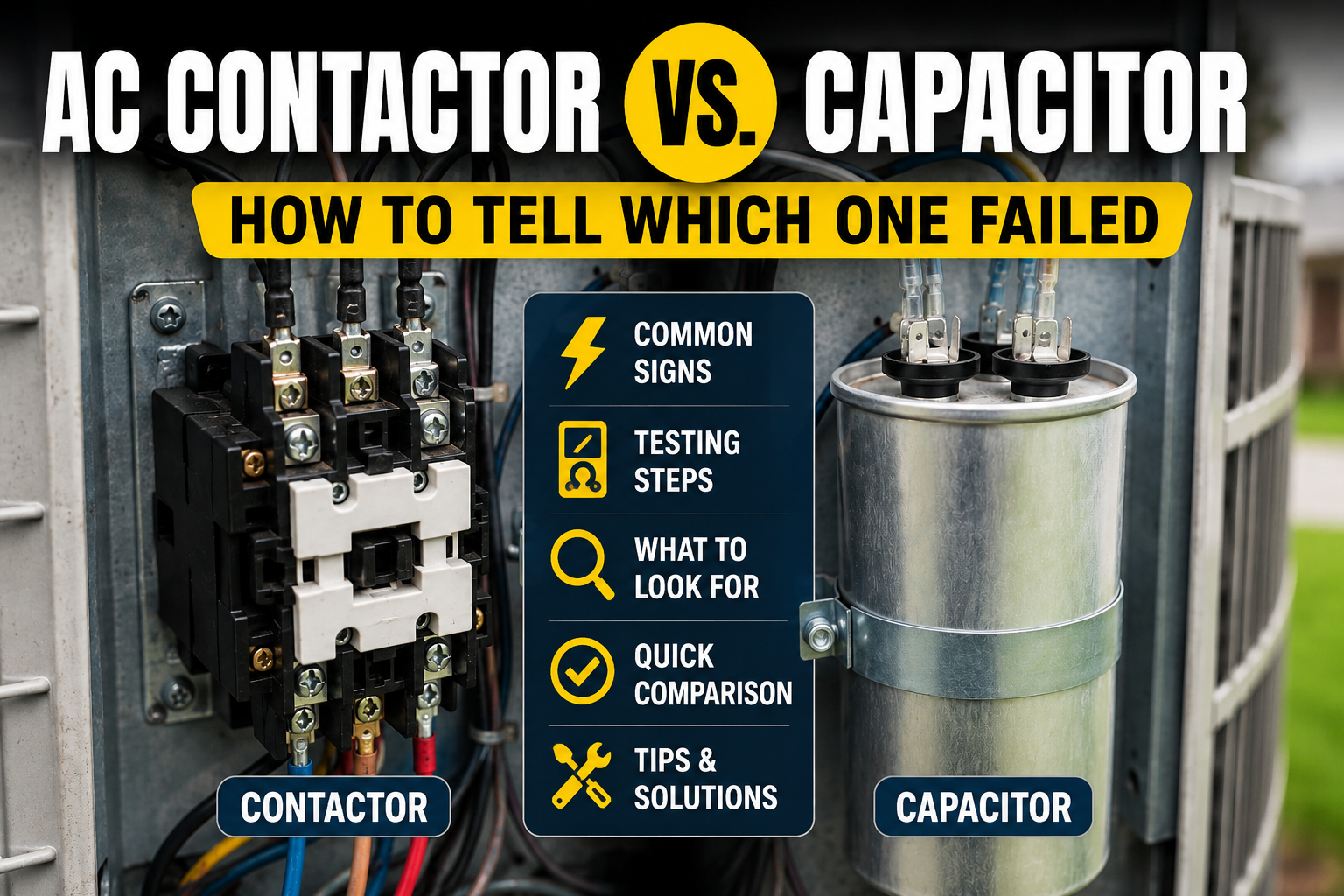
- Capacitors give motors and compressors the initial jolt of power they need to start. A bulging or leaking capacitor is one of the most common — and cheapest — fixes in the trade.
Refrigeration Components
This is where system-specific knowledge — and, for most of it, EPA 608 certification — becomes non-negotiable.
- Compressors are the heart of the cooling cycle — the most expensive single part on most systems.
- Filter driers remove moisture and contaminants from the refrigerant line — cheap insurance against a much more expensive repair down the line.
- Access valves & fittings and refrigerants & charging kits round out anything touching the sealed system.
If your business is navigating the shift to A2L refrigerants, our A2L Refrigerant Transition Guide covers what has changed and which tools now need reverse-thread fittings.
Air Distribution
Even a perfectly running system underperforms if the air cannot move properly once it leaves the unit.
- Flexible duct and dampers control where and how much air goes where.
- Return air grilles and plenums manage airflow in and out of the system. A poorly sized return grille is a surprisingly common — and easy to miss — reason a system runs longer than it should.
HVAC Diagnostic Tools
Parts are only half the job — diagnosing what actually failed is the other half.
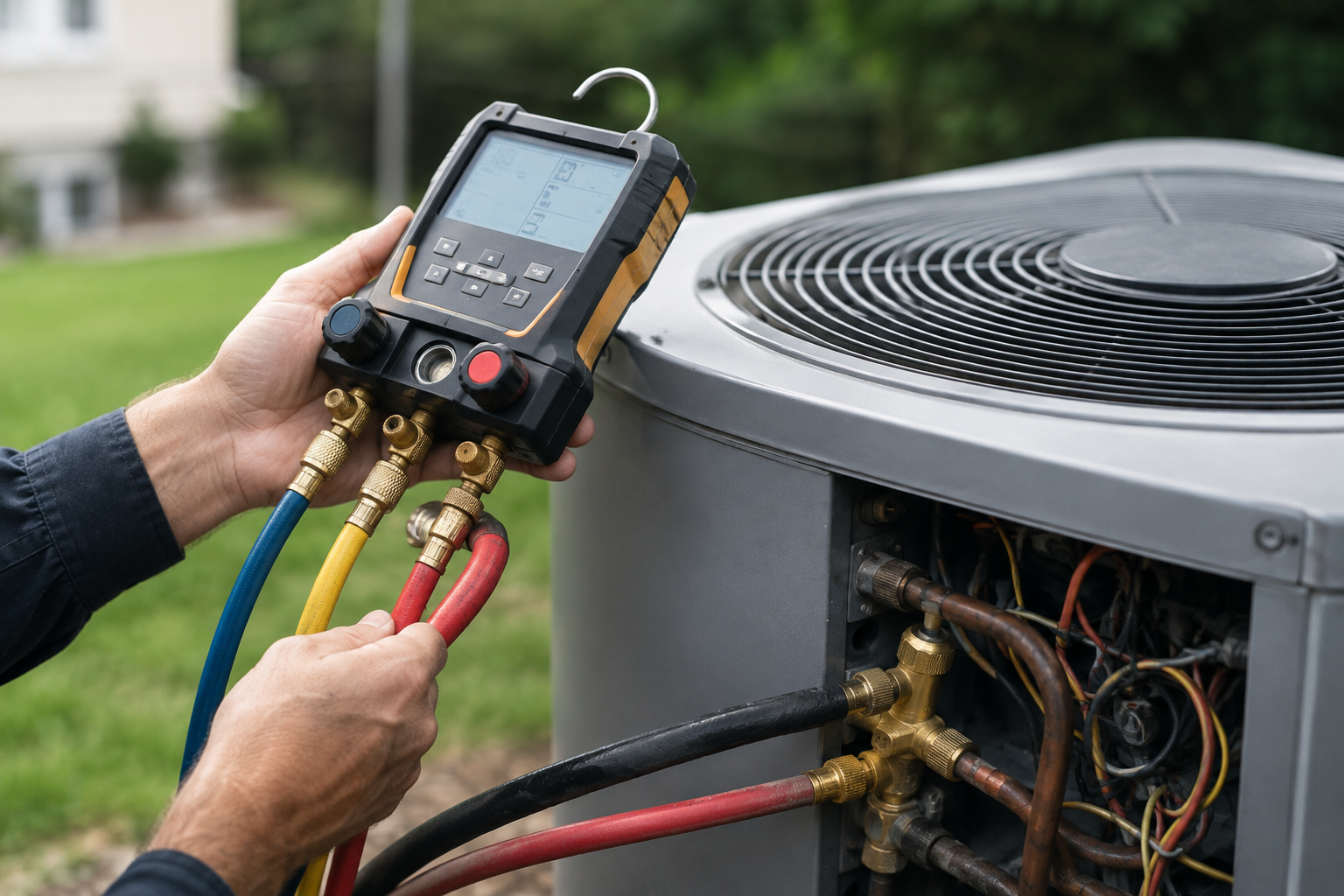
- Digital manifolds and manifold gauge sets read system pressures to confirm a proper charge.
- Leak detectors find the source of a slow refrigerant leak before it becomes a full recharge.
- Vacuum pumps & accessories pull moisture and air out of the line set before charging — skipping this step is one of the fastest ways to shorten a compressor's life.
If you are chasing faster micron pulls, our Fieldpiece VC1G & VC2G evacuation guide walks through cutting that time down.
Quick Reference: HVAC Parts Categories at a Glance
| Category | What It Does | Common Warning Sign |
|---|---|---|
| Controls & Automation | Manages ignition, timing, and system safety logic | Error codes, unresponsive thermostat, no ignition |
| Motors & Components | Moves air and powers the compressor start-up | Humming, grinding, weak or no airflow |
| Refrigeration Components | Manages the sealed refrigerant cycle | Warm air, slow cooling, high head pressure |
| Air Distribution | Delivers conditioned air through the space | Uneven rooms, long run times, weak return airflow |
| Diagnostic Tools | Confirms charge, leaks, and pressures during service | N/A — used to diagnose the categories above |
How to Choose the Right HVAC Parts and the Right Supplier
Once you know what you need, the harder question is often where to buy it from. A few things worth checking before you order:
- OEM vs. equivalent. Genuine OEM parts protect equipment warranties and are usually the safer default unless you know a specific aftermarket part is a verified match.
- Stock depth and shipping speed. A supplier that is out of stock on the part you need is the same as a supplier that does not carry it. Texpert Deals ships same-day on in-stock orders, typically arriving within 3–5 business days, backed by genuine, warranty-backed parts and 30-day returns.
- Pricing structure for volume buyers. If you are ordering regularly, Net-30 terms and wholesale pricing matter more than any single line-item price.
- Brand coverage. A single supplier that stocks Honeywell, Goodman, and Trane parts side by side saves a lot of time compared to juggling separate accounts with brand-specific distributors.
Pro Tip for Contractors: Always confirm the exact OEM part number before ordering a replacement — capacitor microfarad ratings, control board model numbers, and motor horsepower specs all need to match exactly to maintain factory safety certification and warranty coverage.
Frequently Asked Questions
What is the difference between HVAC "parts" and HVAC "supplies"?
In practice, the trade uses these terms almost interchangeably. "Parts" usually refers to components that go inside or directly onto the system (capacitors, motors, control boards), while "supplies" is a broader umbrella that also covers consumables and materials like duct tape, sealants, and refrigerant.
Do I need to be a licensed contractor to buy HVAC parts?
Most individual parts can be purchased by anyone. Refrigerant purchase and handling, however, requires EPA Section 608 certification under federal law — this applies to homeowners and contractors alike.
How do I know if I need OEM or aftermarket parts?
If the equipment is still under manufacturer warranty, OEM parts are the safer choice to avoid voiding coverage. Outside of warranty, a verified aftermarket equivalent is often a reasonable and more affordable option — when in doubt, ask before ordering.
Does Texpert Deals offer wholesale pricing for contractors?
Yes — Texpert Deals offers Net-30 terms and volume pricing for contractors, distributors, and resellers. Request a quote to get set up.
How fast can I get HVAC parts shipped?
In-stock items ship same-day and typically arrive within 3–5 business days, across our full catalogue of 100,000+ items.
Final Thoughts
Whether you are troubleshooting a no-heat call, stocking a truck for the week, or just trying to understand what part failed before your technician arrives, HVAC parts and supplies break down into a manageable set of categories once you know what to look for.
Explore our full catalogue of controls, motors, refrigeration components, ductwork, and diagnostic tools from 1,000+ trusted brands at Texpert Deals, with fast nationwide shipping.
Related Reading: